
Data Silos & Fragmentation
Disconnected data across systems limits visibility and accurate analysis.
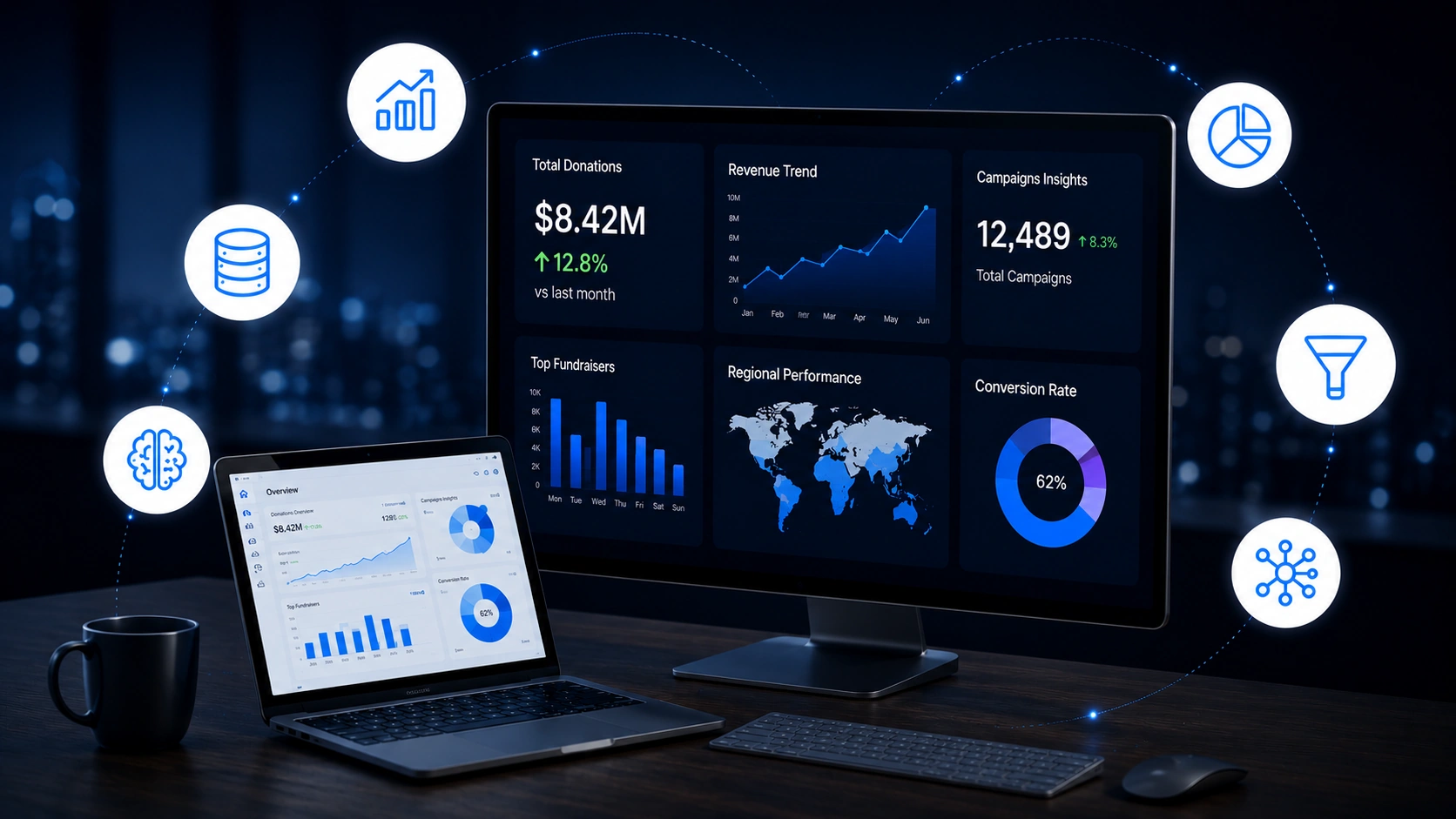
Turn data into actionable insights that empower informed decision-making. Optimize performance, uncover opportunities, and create measurable business impact through trusted, data-driven strategies.
Disconnected data across systems limits visibility and accurate analysis.
Inconsistent, inaccurate, or incomplete data leads to unreliable insights.
Time-consuming manual processes delay decisions and reduce agility.
Data exists but is not analyzed effectively or translated into actions.
Shortage of analytics talent and advanced tools limits analytics maturity.
Difficulty measuring business impact results in reduced stakeholder confidence.
Assess data assets, quality, architecture, and business needs to identify opportunities and priorities.
Integrate and cleanse data from multiple sources to build a trusted, governed foundation.
Apply advanced analytics, statistical models, and AI/ML to uncover patterns and predict outcomes.
Create intuitive dashboards and reports that deliver clear, contextual, and actionable insights.
Embed insights into workflows and applications to drive decisions and improve performance.
Continuously measure impact, refine models, and evolve analytics capabilities for sustained value.
Make faster, data-driven decisions with confidence across the enterprise.
Optimize operations and resources to drive higher productivity and results.
Understand customers deeper to deliver personalized experiences and loyalty.
Identify growth opportunities, optimize pricing, and increase market responsiveness.
Improve data governance and visibility to manage risks and ensure compliance.
Build a data-driven culture that empowers teams and accelerates innovation.
An enterprise data strategy is a comprehensive business plan that defines how an organization collects, governs, manages, integrates, protects, and uses data to achieve its strategic objectives. Rather than treating data as a byproduct of business operations, a modern data strategy recognizes data as a strategic enterprise asset that supports decision-making, operational efficiency, innovation, and long-term growth.
An effective enterprise data strategy aligns business objectives with data governance, architecture, analytics, technology, security, and organizational capabilities. It establishes how data will be created, shared, integrated, maintained, and transformed into actionable business intelligence while ensuring compliance, quality, and consistency across the organization.
Organizations with a well-defined data strategy make faster decisions, improve customer experiences, strengthen operational performance, reduce business risk, and create a solid foundation for Artificial Intelligence, advanced analytics, and digital transformation initiatives.
A strong data strategy enables organizations to make informed decisions, improve operational performance, enhance customer experiences, and respond more effectively to changing market conditions. Without a coordinated approach to managing enterprise data, organizations often struggle with inconsistent reporting, duplicate information, disconnected systems, poor data quality, and limited business visibility.
A modern data strategy establishes standardized governance, ownership, quality standards, integration frameworks, and analytics capabilities that allow decision-makers to trust the information they use every day. It also helps organizations prioritize data investments, reduce operational inefficiencies, strengthen regulatory compliance, and support enterprise-wide digital transformation initiatives.
Organizations that treat data as a strategic asset gain a competitive advantage by making faster, evidence-based decisions while creating new opportunities for innovation, operational excellence, and sustainable growth.
Data is the foundation of digital transformation because every modern business capability—from Artificial Intelligence and automation to customer experience and predictive analytics—depends on trusted, accessible, and well-governed enterprise data. Organizations cannot successfully transform their operations without understanding, managing, and leveraging their data effectively.
As organizations modernize applications, automate business processes, migrate to the cloud, and adopt advanced technologies, data connects people, systems, and business processes into a unified digital ecosystem. High-quality enterprise data enables real-time reporting, executive dashboards, customer insights, operational analytics, and intelligent decision-making across the organization.
Successful digital transformation initiatives begin by strengthening data governance, integration, quality, and architecture. Organizations that invest in data capabilities early accelerate transformation while reducing implementation risk and improving long-term business outcomes.
Many organizations generate enormous volumes of data but struggle to convert that information into trusted business intelligence. Common data management challenges include poor data quality, disconnected systems, inconsistent reporting, duplicate records, data silos, limited governance, security concerns, compliance requirements, and the rapid growth of structured and unstructured data.
These challenges often prevent executives from obtaining a single, reliable view of business performance, resulting in delayed decisions, increased operational costs, and missed opportunities. As organizations adopt cloud technologies, Artificial Intelligence, and enterprise analytics, the complexity of managing data across multiple platforms continues to increase.
Addressing these challenges requires a comprehensive approach that combines data governance, integration, master data management, security, modern architecture, and continuous quality improvement. Organizations that manage data proactively create trusted information assets that support strategic decision-making and long-term business success.
Building a modern data strategy begins with understanding how data supports organizational objectives rather than focusing solely on technology. Executive leaders should first assess current data capabilities, business priorities, technology maturity, governance practices, analytics needs, and organizational readiness before defining a future-state vision.
A modern data strategy typically includes enterprise data governance, data architecture, integration strategy, master data management, cloud data platforms, analytics capabilities, Artificial Intelligence readiness, cybersecurity, compliance, data quality, executive dashboards, and performance measurement. It should also define clear ownership, governance structures, investment priorities, and implementation roadmaps that align with long-term business goals.
Organizations should review and refine their data strategy continuously as business requirements evolve. A flexible, business-driven approach ensures enterprise data remains trusted, accessible, secure, and capable of supporting innovation, operational excellence, and future growth.
Data governance is the framework of policies, processes, standards, roles, and responsibilities that ensures enterprise data is accurate, consistent, secure, and used responsibly across the organization. It establishes how data is created, managed, shared, protected, and maintained throughout its lifecycle so that employees and executives can trust the information used for decision-making.
An effective data governance program defines data ownership, stewardship, quality standards, security controls, privacy requirements, metadata management, and compliance policies. It also establishes accountability for maintaining enterprise data and resolving issues related to data consistency, accessibility, and integrity.
Rather than being viewed solely as an IT initiative, data governance should be a business-led discipline supported by technology. Organizations with mature governance frameworks improve reporting accuracy, strengthen regulatory compliance, reduce operational risk, and create a reliable foundation for analytics, Artificial Intelligence, and digital transformation.
Data quality determines the reliability and usefulness of the information organizations depend on for business operations and strategic decision-making. High-quality data is accurate, complete, consistent, timely, valid, and relevant, allowing executives to make confident decisions based on trusted information.
Poor data quality can lead to inaccurate reporting, operational inefficiencies, regulatory compliance issues, customer dissatisfaction, financial losses, and ineffective business planning. Duplicate records, inconsistent formats, missing information, outdated data, and manual data entry errors reduce confidence in enterprise information and increase operational complexity.
Organizations that invest in data quality management improve customer experiences, strengthen analytics, enhance operational efficiency, and reduce business risk. Maintaining high-quality data should be a continuous process supported by governance, standardized business processes, automated validation, and ongoing monitoring.
Establishing data governance begins by treating data as a strategic business asset rather than simply an IT resource. Organizations should define clear governance objectives, identify executive sponsors, assign data owners and data stewards, establish governance committees, and develop enterprise-wide policies that guide how data is managed throughout its lifecycle.
A comprehensive governance framework typically includes data quality standards, metadata management, master data management, security policies, privacy controls, compliance requirements, access management, data classification, lifecycle management, and performance metrics. Governance should also define how data issues are identified, resolved, and continuously monitored across the organization.
Successful governance programs are collaborative, involving business leaders, IT teams, compliance professionals, and operational stakeholders. By combining people, processes, and technology, organizations build trusted data environments that support business intelligence, analytics, and enterprise-wide decision-making.
Poor data quality is typically the result of inconsistent business processes, fragmented systems, manual data entry, duplicate records, outdated information, inadequate governance, and limited accountability for enterprise data. As organizations grow and adopt additional business applications, maintaining consistent and reliable data becomes increasingly complex.
Common causes include disconnected enterprise systems, inconsistent data definitions, multiple versions of the same record, incomplete information, integration failures, lack of validation rules, insufficient employee training, and weak data management practices. Without standardized governance, these issues accumulate over time and reduce confidence in enterprise reporting and analytics.
Organizations can significantly improve data quality by establishing governance frameworks, automating validation processes, implementing master data management, improving system integration, and regularly monitoring key data quality metrics. Preventing data quality issues is considerably more cost-effective than correcting them after they impact business operations.
Trusted enterprise data is created by combining strong governance, consistent data quality practices, standardized business processes, modern integration capabilities, and executive accountability. Organizations build trust by ensuring data is accurate, complete, timely, secure, and consistently available across all business functions.
Building trusted data begins with identifying authoritative data sources, establishing master data management practices, improving integration between enterprise applications, defining common business terminology, and implementing quality controls throughout the data lifecycle. Organizations should also establish data stewardship programs, continuously monitor quality metrics, and promote a culture where data is recognized as a valuable business asset.
Trusted enterprise data enables executives to make faster, more informed decisions while supporting Business Intelligence, predictive analytics, Artificial Intelligence, regulatory compliance, and enterprise-wide digital transformation initiatives.
Business Intelligence (BI) is the process of collecting, integrating, analyzing, and presenting enterprise data to help organizations make informed business decisions. Rather than relying on spreadsheets, manual reports, or intuition, Business Intelligence transforms raw data into meaningful insights through dashboards, reports, scorecards, visualizations, and interactive analytics.
Modern BI platforms consolidate information from ERP, CRM, Human Resources, Finance, Supply Chain, customer applications, and other enterprise systems into a single, trusted source of business intelligence. Executives gain real-time visibility into operational performance, financial results, customer trends, workforce metrics, and strategic initiatives, enabling faster and more confident decision-making.
Business Intelligence is no longer simply a reporting tool—it has become a strategic capability that enables organizations to monitor performance, identify opportunities, reduce risk, improve operational efficiency, and support enterprise-wide digital transformation.
Executive dashboards provide senior leaders with a real-time view of the organization's most important business metrics, enabling faster, more informed, and data-driven decisions. Instead of reviewing multiple reports from different departments, executives access a centralized dashboard that presents key performance indicators (KPIs), trends, operational metrics, financial results, and strategic objectives in an intuitive visual format.
Effective executive dashboards consolidate information across finance, sales, operations, human resources, customer experience, manufacturing, and supply chain functions. Interactive visualizations allow leaders to drill into performance, identify trends, detect emerging risks, and monitor organizational progress without waiting for manually prepared reports.
Organizations that invest in executive dashboards improve strategic planning, accelerate decision-making, strengthen accountability, and create a shared understanding of business performance across leadership teams.
The most effective executive dashboards focus on Key Performance Indicators (KPIs) that directly align with organizational strategy and business objectives. Rather than measuring every available metric, executives should monitor a balanced set of financial, operational, customer, workforce, and strategic performance indicators that provide meaningful insight into enterprise performance.
Common executive KPIs include revenue growth, profitability, operating margin, customer satisfaction, customer retention, employee engagement, workforce productivity, operational efficiency, inventory turnover, order fulfillment, project performance, digital adoption, cybersecurity posture, compliance metrics, and business growth indicators. Industry-specific organizations may also monitor specialized operational metrics relevant to their sector.
Organizations should review KPIs regularly and adjust them as strategic priorities evolve. Well-defined KPIs help leadership identify opportunities, measure progress, improve accountability, and make proactive business decisions based on trusted data.
Effective executive dashboards begin with business questions—not technology. Organizations should first identify the decisions executives need to make, determine which KPIs best support those decisions, and then design dashboards that present accurate, relevant, and timely information in a clear and intuitive format.
Successful dashboards integrate data from multiple enterprise systems while ensuring consistent definitions, trusted data quality, and appropriate governance. Dashboards should prioritize simplicity by highlighting critical metrics, visual trends, alerts, and drill-down capabilities that allow executives to investigate performance without overwhelming them with unnecessary information.
Organizations should continuously refine dashboards based on executive feedback, changing business priorities, and evolving organizational goals. A well-designed executive dashboard becomes an essential management tool that supports daily operations, strategic planning, and long-term business growth.
Self-service Business Intelligence enables business users to access, analyze, and visualize enterprise data without relying on IT teams to create every report or dashboard. Modern BI platforms provide intuitive tools that allow managers, analysts, and executives to explore data, generate reports, create dashboards, and answer business questions independently while maintaining governance and security.
Self-service BI improves organizational agility by reducing reporting delays and empowering business users to make faster decisions using trusted enterprise data. Employees can analyze sales performance, financial results, operational metrics, customer trends, and workforce data without requiring specialized technical expertise.
Successful self-service BI requires strong data governance, standardized definitions, role-based security, user training, and trusted enterprise data. When implemented effectively, self-service analytics increases productivity, encourages a data-driven culture, and allows IT teams to focus on higher-value strategic initiatives.
Enterprise analytics is the practice of analyzing data across the entire organization to generate actionable insights that improve strategic planning, operational performance, customer experiences, and business decision-making. Unlike departmental reporting, enterprise analytics integrates information from finance, operations, sales, marketing, human resources, supply chain, customer service, and other business functions to provide a comprehensive view of organizational performance.
Modern enterprise analytics combines descriptive, diagnostic, predictive, and prescriptive analytics to help organizations understand what has happened, why it happened, what is likely to happen next, and what actions should be taken. By leveraging integrated data, advanced analytics, Artificial Intelligence, and interactive dashboards, organizations gain deeper visibility into business operations and emerging trends.
Enterprise analytics enables executive leaders to make faster, evidence-based decisions, optimize business performance, improve resource allocation, reduce risk, and identify new opportunities for growth. Organizations that invest in enterprise analytics build stronger competitive advantages through better insights and more informed decision-making.
Becoming a data-driven organization requires more than implementing analytics tools—it requires building a culture where business decisions are consistently supported by trusted data and measurable evidence. Organizations achieve this by combining executive leadership, strong data governance, modern analytics platforms, business intelligence, employee education, and enterprise-wide access to reliable information.
The journey typically begins by establishing a clear data strategy, improving data quality, integrating enterprise systems, defining executive KPIs, and implementing dashboards that provide real-time visibility into business performance. Organizations must also promote data literacy, encourage collaboration across departments, and empower employees to use analytics in their daily decision-making.
Successful data-driven organizations treat data as a strategic business asset rather than simply an operational resource. By embedding analytics into business processes, organizations improve agility, reduce uncertainty, accelerate innovation, and continuously improve organizational performance.
Predictive analytics uses historical data, statistical modeling, Artificial Intelligence, and machine learning to forecast future business outcomes and identify emerging trends. Rather than simply reporting past performance, predictive analytics helps organizations anticipate future events, reduce uncertainty, and make proactive business decisions.
Organizations use predictive analytics across a wide range of business functions, including sales forecasting, demand planning, inventory optimization, customer retention, fraud detection, workforce planning, equipment maintenance, financial forecasting, and risk management. By identifying patterns within enterprise data, predictive models enable organizations to respond to changing business conditions before problems occur.
Predictive analytics improves planning accuracy, strengthens operational efficiency, reduces business risk, and supports more informed executive decision-making. When combined with trusted enterprise data and Business Intelligence, predictive analytics becomes a powerful capability for driving sustainable business growth.
Prescriptive analytics builds upon predictive analytics by recommending the best actions organizations should take to achieve desired business outcomes. While predictive analytics estimates what is likely to happen, prescriptive analytics evaluates multiple scenarios and identifies optimal decisions based on business objectives, operational constraints, and available resources.
Organizations apply prescriptive analytics to supply chain optimization, production scheduling, workforce planning, pricing strategies, inventory management, financial planning, transportation logistics, customer engagement, and resource allocation. Advanced algorithms, optimization models, Artificial Intelligence, and business rules work together to recommend actions that maximize efficiency, profitability, and customer satisfaction.
As organizations continue adopting Artificial Intelligence and advanced analytics, prescriptive analytics becomes an increasingly valuable capability for executive leaders seeking to improve strategic planning, optimize operations, and make faster, evidence-based business decisions.
Analytics improves business performance by transforming enterprise data into actionable insights that enable organizations to make faster decisions, optimize operations, improve customer experiences, and identify new growth opportunities. Rather than relying on assumptions or historical reports alone, organizations use analytics to understand performance drivers, monitor business trends, and continuously improve operational outcomes.
Analytics supports virtually every business function, including finance, operations, human resources, customer service, marketing, manufacturing, procurement, and executive leadership. Organizations use analytics to improve forecasting, optimize resources, reduce operational costs, increase productivity, strengthen compliance, and measure progress toward strategic objectives.
The greatest value of analytics comes when it becomes embedded within everyday business operations. Organizations that consistently use analytics to guide decisions become more agile, resilient, innovative, and competitive while creating measurable improvements in business performance.
Modern data architecture is the structured design of how enterprise data is collected, integrated, stored, governed, processed, secured, and delivered across the organization. It provides the foundation that enables businesses to transform raw data into trusted business intelligence while supporting analytics, Artificial Intelligence, digital transformation, and enterprise decision-making.
Unlike traditional architectures that relied on isolated databases and departmental reporting, modern data architectures integrate data from ERP, CRM, Human Resources, Finance, IoT devices, cloud applications, third-party platforms, and operational systems into a connected enterprise ecosystem. These architectures emphasize scalability, cloud readiness, API-based integration, data governance, security, and real-time analytics.
A well-designed modern data architecture enables organizations to eliminate data silos, improve data quality, accelerate reporting, strengthen governance, and create a flexible platform capable of supporting future business growth and emerging technologies.
A data warehouse is a centralized repository that stores structured, historical, and integrated business data from multiple enterprise systems to support reporting, Business Intelligence, and analytics. Rather than processing day-to-day business transactions like operational systems, a data warehouse is optimized for querying, trend analysis, executive reporting, and strategic decision-making.
Data warehouses consolidate information from ERP, CRM, finance, sales, supply chain, human resources, and other enterprise applications into a consistent, trusted environment. Data is typically cleansed, standardized, validated, and organized using predefined business models, enabling executives to generate reliable reports and dashboards quickly.
Organizations use data warehouses to improve reporting accuracy, accelerate analytics, monitor KPIs, support regulatory reporting, and provide executives with a single source of truth for enterprise performance. A modern cloud-based data warehouse also supports advanced analytics and integrates with Artificial Intelligence and visualization platforms.
A data lake is a centralized repository that stores large volumes of structured, semi-structured, and unstructured data in its original format. Unlike a traditional data warehouse, which organizes information into predefined structures before storage, a data lake allows organizations to retain raw data for future analysis, machine learning, Artificial Intelligence, and advanced analytics.
Data lakes can collect information from enterprise applications, IoT devices, websites, mobile applications, documents, images, videos, sensor data, social media, cloud services, and external data sources. This flexibility makes data lakes particularly valuable for organizations that need to analyze diverse datasets or develop AI and predictive analytics capabilities.
To maximize value, organizations should implement strong governance, metadata management, security, and data cataloging practices. Without proper governance, a data lake can become difficult to manage and lose its effectiveness as an enterprise data asset.
The choice between a data warehouse and a data lake depends on an organization's business objectives, analytics requirements, data types, and technology strategy. Rather than viewing them as competing technologies, many organizations successfully implement both as complementary components of a modern enterprise data platform.
Data warehouses are ideal for structured reporting, executive dashboards, Business Intelligence, regulatory reporting, and operational analytics where trusted, curated data is essential. Data lakes are better suited for storing diverse datasets, supporting Artificial Intelligence, machine learning, predictive analytics, and exploratory data analysis where flexibility and scalability are priorities.
Many organizations now adopt a modern "lakehouse" architecture that combines the strengths of both technologies. This approach enables organizations to manage structured and unstructured data while supporting both operational reporting and advanced analytics within a unified platform.
Modernizing data platforms involves transforming legacy data environments into scalable, integrated, cloud-enabled ecosystems that support Business Intelligence, advanced analytics, Artificial Intelligence, and real-time decision-making. Rather than simply upgrading technology, modernization focuses on improving how enterprise data is managed, governed, integrated, and delivered to business users.
A successful modernization initiative begins with assessing existing data architecture, identifying business requirements, evaluating data quality, reviewing integration capabilities, and establishing governance standards. Organizations then develop a roadmap that may include cloud migration, data warehouse modernization, API integration, master data management, metadata management, automation, advanced analytics, and self-service Business Intelligence.
Organizations that modernize their data platforms improve reporting speed, strengthen governance, increase operational agility, reduce infrastructure complexity, and create a future-ready data foundation that supports innovation and long-term business growth.
Data integration is the process of connecting data from multiple enterprise systems into a unified environment where it can be accessed, analyzed, and used consistently across the organization. As businesses adopt ERP, CRM, HR, finance, customer experience, manufacturing, cloud applications, and third-party platforms, enterprise data often becomes fragmented across disconnected systems. Data integration eliminates these silos by enabling trusted information to flow seamlessly throughout the organization.
Without effective data integration, organizations struggle with duplicate records, inconsistent reporting, delayed decision-making, manual data reconciliation, and limited visibility into business performance. Integrated data provides executives with a comprehensive view of operations, customers, financial performance, workforce, and strategic initiatives.
Modern data integration leverages APIs, cloud integration platforms, data pipelines, ETL/ELT processes, and event-driven architectures to create connected enterprise ecosystems. Organizations that invest in enterprise data integration improve operational efficiency, strengthen analytics, enable Artificial Intelligence, and accelerate digital transformation.
Data silos occur when information is isolated within individual departments, business units, or applications, preventing organizations from obtaining a complete view of business performance. These silos often result from disconnected enterprise systems, inconsistent business processes, acquisitions, legacy applications, and independent technology decisions made over time.
Eliminating data silos requires both organizational and technical alignment. Organizations should establish enterprise data governance, standardize business definitions, integrate enterprise applications, implement Master Data Management (MDM), and develop modern data architectures that support information sharing across departments. Executive sponsorship is equally important to encourage collaboration and enterprise-wide data ownership.
Organizations that eliminate data silos improve customer experiences, strengthen operational efficiency, increase reporting accuracy, accelerate decision-making, and create trusted enterprise data that supports analytics, Artificial Intelligence, and business innovation.
Master Data Management (MDM) is the discipline of creating and maintaining a single, consistent, and trusted version of an organization's most important business data. Master data typically includes customers, suppliers, products, employees, locations, assets, and other core business entities that are shared across multiple enterprise applications.
Without MDM, organizations often maintain duplicate or conflicting records across ERP, CRM, HR, finance, and operational systems. These inconsistencies lead to reporting errors, operational inefficiencies, poor customer experiences, and reduced confidence in business information.
A successful MDM program establishes governance, standardized definitions, data ownership, quality controls, synchronization processes, and technology platforms that ensure master data remains accurate and consistent throughout the enterprise. MDM enables organizations to improve analytics, strengthen regulatory compliance, enhance customer experiences, and create a trusted foundation for Business Intelligence and Artificial Intelligence initiatives.
A single source of truth is a trusted, authoritative repository of enterprise information that ensures everyone across the organization uses consistent, accurate, and up-to-date data for reporting and decision-making. Rather than maintaining multiple conflicting versions of business information, organizations establish common data definitions, governance policies, integration frameworks, and master data management practices.
Creating a single source of truth begins by identifying authoritative systems of record, integrating enterprise applications, standardizing business terminology, improving data quality, and implementing governance processes that maintain consistency throughout the data lifecycle. Modern data platforms, cloud architectures, and Business Intelligence solutions further enable organizations to deliver reliable information across departments.
Organizations with a single source of truth improve executive confidence, eliminate reporting inconsistencies, strengthen collaboration, and accelerate business decision-making. Trusted enterprise information also supports regulatory compliance, Artificial Intelligence, predictive analytics, and long-term digital transformation initiatives.
Application Programming Interfaces (APIs) enable enterprise applications to exchange data securely, consistently, and efficiently, making them a critical component of modern data integration strategies. APIs provide standardized methods for connecting ERP, CRM, Human Resources, Finance, Business Intelligence, cloud platforms, mobile applications, and third-party services without requiring complex custom integrations.
By adopting API-first integration strategies, organizations improve scalability, simplify application connectivity, accelerate digital transformation, and reduce the complexity of integrating new technologies. APIs also support real-time data synchronization, event-driven architectures, automation, and seamless information sharing across enterprise systems.
Modern organizations increasingly rely on APIs to create flexible digital ecosystems capable of supporting Artificial Intelligence, advanced analytics, cloud services, customer experiences, and future business innovation. A well-managed API strategy improves agility while protecting enterprise security, governance, and long-term technology investments.
Artificial Intelligence (AI) enhances enterprise analytics by enabling organizations to analyze larger volumes of data, identify hidden patterns, detect anomalies, automate insights, and make faster, more informed business decisions. Traditional analytics primarily explains what has happened, while AI extends analytics by predicting future outcomes, recognizing complex relationships, and continuously improving recommendations based on new information.
AI-powered analytics supports use cases such as demand forecasting, customer segmentation, fraud detection, predictive maintenance, financial planning, supply chain optimization, workforce analytics, and operational performance monitoring. By automating data analysis and highlighting meaningful trends, AI enables executives to focus on strategic decisions rather than manually interpreting reports.
Organizations that combine trusted enterprise data with Artificial Intelligence create intelligent analytics platforms that improve operational efficiency, accelerate decision-making, reduce business risk, and uncover new opportunities for innovation and growth.
Machine Learning (ML) enhances Business Intelligence by enabling analytics platforms to automatically recognize patterns, detect trends, generate forecasts, and continuously improve analytical models as new data becomes available. Unlike traditional Business Intelligence, which relies on predefined reports and rules, machine learning allows organizations to discover insights that would be difficult or impossible to identify manually.
Organizations use machine learning to improve sales forecasting, customer behavior analysis, inventory optimization, demand planning, financial forecasting, fraud detection, predictive maintenance, workforce planning, and operational performance analysis. ML algorithms continuously learn from enterprise data, improving the accuracy of predictions and recommendations over time.
By integrating machine learning into Business Intelligence, organizations move beyond descriptive reporting toward predictive and intelligent decision-making. This enables executive leaders to anticipate business challenges, identify growth opportunities, and improve organizational performance with greater confidence.
Generative AI is transforming enterprise analytics by making business insights more accessible, conversational, and actionable. Instead of requiring users to navigate complex dashboards or build reports manually, Generative AI allows executives and business users to ask questions using natural language and receive meaningful summaries, visualizations, explanations, and recommendations in seconds.
For example, executives can ask questions such as "Why did sales decline last quarter?", "Which regions exceeded forecast?", or "Summarize customer satisfaction trends over the past six months." Generative AI analyzes enterprise data, identifies relevant information, and delivers contextual responses that simplify decision-making.
Beyond reporting, Generative AI can generate executive summaries, identify anomalies, recommend actions, create visual reports, explain KPI changes, and automate routine analytical tasks. As organizations adopt trusted data governance and modern analytics platforms, Generative AI becomes a powerful business assistant that enhances productivity and executive decision-making.
Data is the foundation of every successful Artificial Intelligence initiative. AI systems learn, generate insights, make predictions, and automate decisions based entirely on the quality, completeness, consistency, and accessibility of enterprise data. Even the most advanced AI technologies cannot produce reliable business outcomes if they are trained on inaccurate, incomplete, or poorly governed information.
Organizations preparing for AI should first establish strong data governance, improve data quality, integrate enterprise systems, standardize business definitions, and create trusted data platforms. High-quality data enables AI models to deliver accurate forecasts, meaningful recommendations, and reliable business intelligence while reducing bias and improving transparency.
Organizations that invest in enterprise data capabilities before implementing AI consistently achieve better outcomes, faster adoption, and greater long-term value from their Artificial Intelligence investments.
Becoming AI-ready involves much more than purchasing Artificial Intelligence technologies. Organizations must establish the business, data, technology, governance, and workforce capabilities necessary to successfully adopt, scale, and sustain AI across the enterprise.
AI readiness begins with a clear AI strategy aligned with business objectives, followed by modern data architecture, trusted data governance, enterprise integration, cloud readiness, cybersecurity, analytics capabilities, and executive sponsorship. Organizations should also develop responsible AI policies, strengthen data literacy, invest in workforce training, and identify high-value business use cases that deliver measurable outcomes.
Rather than implementing AI across every business function simultaneously, successful organizations begin with targeted pilot initiatives that demonstrate business value, build organizational confidence, and establish governance frameworks before expanding AI capabilities across the enterprise.
Executive leaders should monitor data KPIs that measure the quality, availability, governance, business adoption, and overall value of enterprise data. Rather than focusing only on technical metrics, organizations should evaluate how effectively data supports strategic decision-making, operational performance, customer experiences, and business growth.
Common executive data KPIs include data quality scores, data completeness, data accuracy, data consistency, dashboard adoption, report usage, analytics adoption, time-to-insight, data integration success rates, API availability, master data quality, regulatory compliance, data latency, self-service analytics usage, and business decision cycle time. Business-specific KPIs such as revenue growth, customer retention, operational efficiency, and forecast accuracy should also be linked to enterprise data initiatives.
Organizations that continuously monitor data performance establish greater trust in enterprise information, improve governance, and ensure analytics investments deliver measurable business value.
Analytics success should be measured by its impact on business outcomes rather than the number of reports or dashboards created. Successful analytics programs improve executive decision-making, increase operational efficiency, reduce business risk, strengthen customer experiences, and enable organizations to achieve measurable strategic objectives.
Organizations typically evaluate analytics success by monitoring dashboard usage, executive adoption, report accuracy, forecasting improvements, operational efficiency gains, customer satisfaction, revenue growth, cost reductions, employee productivity, and faster decision-making. They also assess the maturity of analytics capabilities, including self-service adoption, predictive analytics usage, and integration with Artificial Intelligence.
Executive leadership should establish measurable success criteria before launching analytics initiatives and continuously evaluate whether insights are influencing business decisions. Organizations that regularly measure analytics performance maximize the value of their data investments and promote a culture of continuous improvement.
The Return on Investment (ROI) of data and analytics reflects the measurable business value created by transforming enterprise data into actionable insights that improve decision-making, operational efficiency, customer experiences, and organizational performance. While technology investments are important, the greatest returns come from better business decisions supported by trusted information.
Organizations generate ROI through improved forecasting, reduced operational costs, increased employee productivity, optimized supply chains, stronger customer retention, faster financial reporting, reduced business risk, improved regulatory compliance, and better allocation of organizational resources. Analytics also helps identify new revenue opportunities, optimize pricing strategies, and improve investment decisions.
To accurately measure ROI, organizations should establish baseline performance metrics before implementing analytics initiatives and regularly compare measurable improvements against strategic business objectives. Both financial and operational benefits should be considered when evaluating the long-term value of enterprise data investments.
Business Intelligence improves profitability by providing executives with timely, accurate, and actionable insights that enable better business decisions across every functional area of the organization. Rather than relying on assumptions or delayed reports, leaders can identify opportunities to increase revenue, reduce operational costs, improve productivity, and optimize resource allocation using trusted enterprise data.
Business Intelligence supports profitability by identifying underperforming products, improving pricing strategies, optimizing inventory levels, increasing customer retention, reducing procurement costs, improving workforce productivity, strengthening financial planning, and enhancing operational efficiency. Interactive dashboards and predictive analytics allow organizations to identify emerging opportunities and respond quickly to changing market conditions.
Organizations that embed Business Intelligence into daily operations make more informed investment decisions, improve operational discipline, and create a culture of continuous performance improvement that contributes directly to long-term profitability.
Operational excellence depends on making consistent, timely, and informed decisions across every business function. Trusted enterprise data enables organizations to monitor performance, identify inefficiencies, standardize business processes, automate workflows, and continuously improve operational outcomes.
Organizations use enterprise data to optimize supply chains, improve manufacturing efficiency, reduce process bottlenecks, monitor workforce productivity, improve customer service, enhance quality management, strengthen regulatory compliance, and allocate resources more effectively. Real-time dashboards and analytics enable managers to identify issues early and respond proactively before they affect business performance.
Organizations that integrate trusted data into everyday operations create a culture of continuous improvement where decisions are based on measurable evidence rather than assumptions. This results in higher productivity, improved service quality, reduced operational costs, and greater organizational agility.
Enterprise analytics is rapidly evolving through the adoption of technologies that make data more accessible, intelligent, and actionable. Organizations are moving beyond traditional reporting toward real-time analytics, Artificial Intelligence, cloud-native platforms, and automated decision intelligence that enable executives to respond faster to changing business conditions.
Key technologies shaping the future of enterprise analytics include Artificial Intelligence (AI), Generative AI, Machine Learning (ML), cloud data platforms, data lakehouses, real-time streaming analytics, Internet of Things (IoT), edge computing, digital twins, natural language querying, intelligent automation, and augmented analytics. These technologies enable organizations to analyze larger volumes of enterprise data while generating deeper insights with greater speed and accuracy.
Successful organizations evaluate emerging technologies based on business value rather than technology trends. By adopting innovations that align with strategic objectives, organizations strengthen decision-making, improve operational efficiency, and maintain long-term competitive advantage.
Future-proofing a data strategy means building a flexible and scalable foundation that can adapt to evolving business priorities, emerging technologies, regulatory requirements, and increasing data volumes. Rather than designing data strategies around today's challenges alone, organizations should establish governance, architecture, and operating models that support continuous innovation.
A future-ready data strategy includes strong data governance, modern data architecture, cloud-enabled platforms, API-first integration, Master Data Management (MDM), Artificial Intelligence readiness, cybersecurity, data privacy, metadata management, and continuous quality improvement. Organizations should also regularly review their strategy to ensure it remains aligned with changing business objectives and market conditions.
Organizations that future-proof their data strategy reduce technical debt, improve organizational agility, accelerate innovation, and create a trusted data foundation capable of supporting Business Intelligence, Artificial Intelligence, and long-term digital transformation.
The future of Business Intelligence extends far beyond static reports and dashboards. Modern Business Intelligence is becoming intelligent, predictive, conversational, and increasingly autonomous through the integration of Artificial Intelligence, machine learning, and natural language technologies.
Future BI platforms will provide real-time insights, automatically detect trends and anomalies, generate executive summaries, recommend business actions, and allow users to interact with enterprise data using conversational language. Business users will spend less time creating reports and more time interpreting insights and making strategic decisions.
Business Intelligence will continue evolving into a comprehensive decision intelligence platform where data, analytics, Artificial Intelligence, automation, and executive dashboards work together to support faster, more informed, and more proactive business leadership.
Artificial Intelligence is transforming enterprise analytics by automating data preparation, identifying hidden patterns, generating predictive insights, and recommending actions that improve business performance. Instead of relying solely on historical reporting, organizations can use AI to anticipate future outcomes, optimize operations, and support strategic planning with greater confidence.
AI enhances enterprise analytics through predictive forecasting, anomaly detection, intelligent alerts, customer behavior analysis, financial modeling, operational optimization, and automated executive reporting. Generative AI further simplifies analytics by enabling executives to ask business questions in natural language and receive immediate explanations, visualizations, and recommendations.
Organizations that combine trusted enterprise data with Artificial Intelligence create analytics platforms that continuously learn, improve, and adapt. This enables faster decisions, reduced operational risk, improved customer experiences, and greater organizational agility.
A modern data-driven enterprise is an organization where trusted data informs decisions at every level—from executive strategy to daily operations. Rather than relying on intuition or disconnected reports, leaders and employees use integrated data, Business Intelligence, analytics, and Artificial Intelligence to guide planning, monitor performance, and continuously improve business outcomes.
Modern data-driven enterprises establish strong governance, maintain high-quality enterprise data, integrate information across business systems, empower employees with self-service analytics, and leverage AI to generate predictive insights and automate decision-making. Data becomes embedded within business processes, enabling faster responses to market changes, improved customer experiences, operational excellence, and continuous innovation.
Organizations that embrace a data-driven culture create a sustainable competitive advantage by making better decisions, improving collaboration, reducing risk, and continuously adapting to changing business environments through trusted enterprise intelligence.
Organizations should prioritize data initiatives based on business value rather than technology complexity. The most successful organizations begin by identifying strategic business objectives and then selecting data initiatives that directly improve executive decision-making, operational efficiency, customer experiences, regulatory compliance, or revenue growth. This ensures data investments generate measurable business outcomes instead of isolated technical improvements.
A structured prioritization framework evaluates each initiative based on business impact, implementation effort, organizational readiness, data quality, technology dependencies, risk, and expected return on investment. High-value initiatives often include executive dashboards, enterprise reporting, data governance, system integration, master data management, and predictive analytics because they deliver immediate operational and strategic benefits.
Rather than attempting to modernize every data capability simultaneously, organizations should adopt a phased roadmap that delivers quick wins while building a scalable foundation for long-term enterprise analytics and Artificial Intelligence.
A data transformation roadmap provides a structured plan for evolving an organization's data capabilities while aligning investments with long-term business strategy. Rather than focusing solely on technology implementation, an effective roadmap addresses governance, people, processes, architecture, analytics, and organizational change to create a sustainable data-driven enterprise.
A comprehensive roadmap typically includes current-state assessments, business objectives, target data architecture, governance framework, data quality improvements, enterprise integration, cloud modernization, Business Intelligence, executive dashboards, Artificial Intelligence readiness, cybersecurity, regulatory compliance, implementation phases, success metrics, and investment priorities. It should also define executive sponsorship, organizational responsibilities, and measurable milestones that demonstrate progress.
Organizations that follow a well-defined roadmap reduce implementation risk, improve resource allocation, strengthen executive alignment, and ensure every data initiative contributes to long-term business success.
Selecting the right data and analytics consulting partner is critical to achieving successful business outcomes. Organizations should seek partners who combine strategic business consulting with deep expertise in enterprise data management, analytics, Business Intelligence, governance, cloud technologies, Artificial Intelligence, and modern data architectures. The right partner focuses on solving business problems—not simply implementing technology.
Key evaluation criteria include experience developing enterprise data strategies, establishing governance frameworks, implementing Business Intelligence solutions, designing executive dashboards, modernizing data platforms, integrating enterprise systems, enabling Artificial Intelligence, and delivering measurable business outcomes. Organizations should also consider industry expertise, knowledge transfer capabilities, implementation methodology, long-term support services, and the ability to scale with future business needs.
The most valuable consulting partners act as long-term strategic advisors who help organizations continuously improve their data capabilities while ensuring technology investments remain aligned with evolving business priorities.
The journey toward becoming a data-driven organization begins with executive commitment and a clear understanding that data is a strategic business asset. Organizations should first assess their current data maturity, identify business priorities, evaluate existing technology capabilities, and establish measurable objectives that align data initiatives with organizational goals.
The initial steps typically include developing an enterprise data strategy, improving data governance, strengthening data quality, integrating enterprise systems, implementing executive dashboards, defining key performance indicators, promoting data literacy, and building a culture where business decisions are consistently supported by trusted information. Organizations should also identify early use cases that demonstrate measurable value and build organizational confidence.
Becoming data-driven is an ongoing transformation rather than a one-time project. Organizations that continuously invest in governance, analytics, and executive decision support create sustainable competitive advantages through better business intelligence and operational excellence.
Organizations choose SRISYS because we believe data should do more than generate reports—it should enable smarter decisions, stronger business performance, and sustainable competitive advantage. Our Data, Analytics & Business Intelligence™ (DABI™) practice combines business strategy, enterprise data management, Business Intelligence, advanced analytics, Artificial Intelligence, and modern data architectures to help organizations transform enterprise information into trusted executive intelligence.
Our expertise spans enterprise data strategy, data governance, Business Intelligence, executive dashboards, predictive analytics, data warehousing, data lakes, Master Data Management (MDM), enterprise integration, cloud data platforms, data visualization, and AI-ready analytics. Rather than delivering isolated technology solutions, we develop integrated data ecosystems that align with organizational goals and support long-term digital transformation.
SRISYS partners with organizations throughout their data journey—from strategy and roadmap development to implementation, modernization, governance, optimization, and continuous improvement. Our business-first methodology ensures data investments deliver measurable value by improving decision-making, operational efficiency, customer experiences, and organizational performance.
Take the 10-minute SRISYS Enterprise Assessment and receive a customized executive report with actionable recommendations.